Basketball
The Three-Point Shot Rewrote Basketball's Geometry
A generation ago the three-pointer was a curiosity. Today it shapes how every team is built, how defences move, and what a good shot looks like.
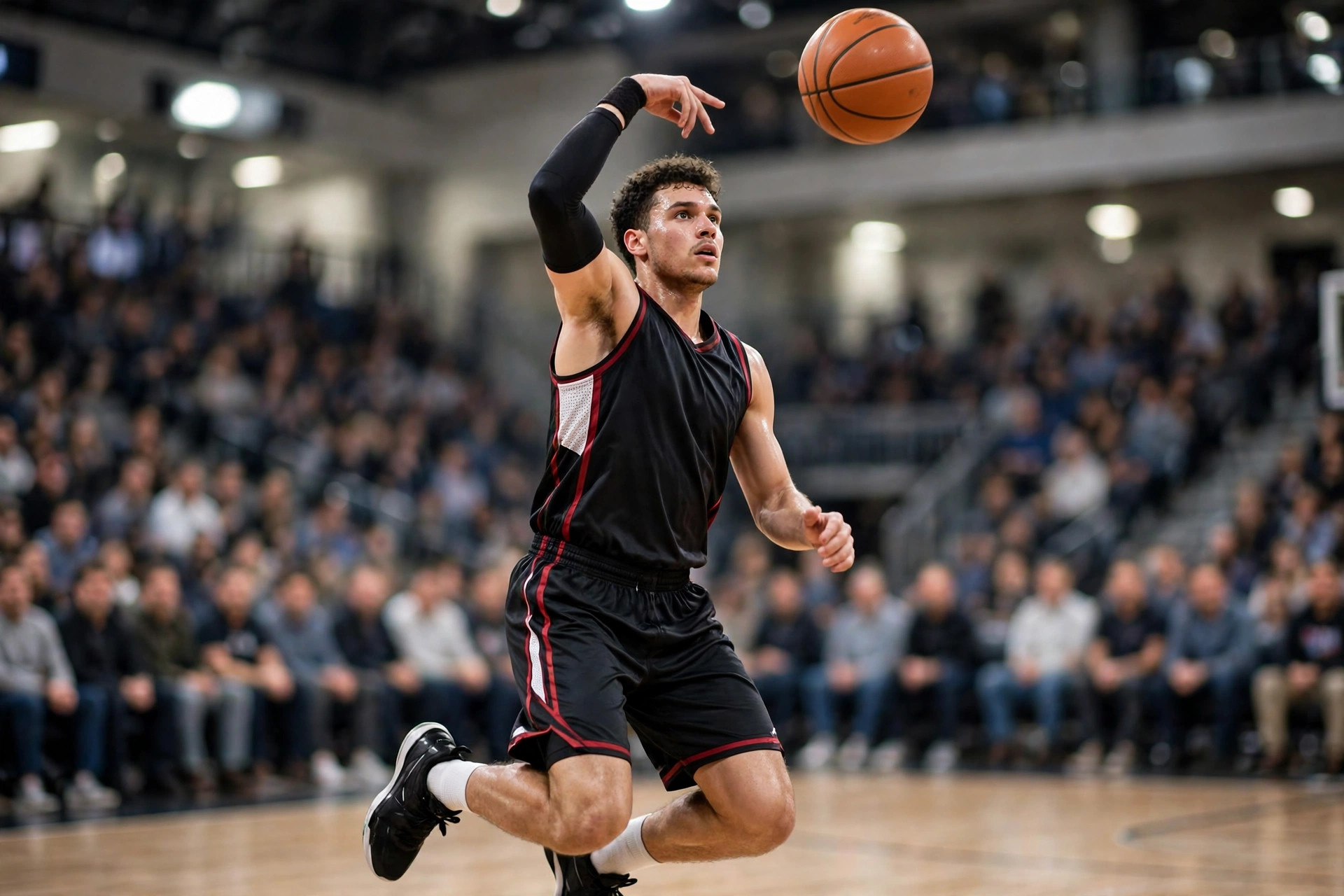
Basketball has always been a game of geometry, but the geometry changed. For most of the sport's history, the best shot was the closest one: get the ball near the basket, where it goes in most often. Then the arithmetic caught up with the habit. A shot worth three points does not need to go in as often as a shot worth two to be worth taking, and once coaches and analysts accepted that, the whole sport rearranged itself around the arc.
The shift is visible in every roster. Centres who once lived in the paint now practise corner threes. Guards who once drove into traffic now pull up from two steps behind the line. Even the tallest players on the floor are expected to be a threat from distance, because a big man who cannot shoot allows the defence to ignore him and clog the lane for everyone else. Shooting has gone from a specialist skill to a basic requirement.
Defences have had to stretch with the offence. A defender can no longer sag into the paint and wait; leaving a good shooter open for a fraction of a second is enough to concede three points. The result is a faster, more spaced-out game, with more ground to cover and more decisions to make in less time. Coaches now spend as much time drilling closeouts and rotations as they once spent drilling post defence.
The change has also reached youth basketball. Young players grow up watching long-range shooting and practise it from an early age, which means the next generation arrives with range that would have seemed impossible twenty years ago. Trainers note that the skill is not just about the shot itself: it requires footwork, balance and the confidence to take a shot that an earlier generation of coaches would have benched a player for attempting.
Not everyone is happy. Critics say the game has become one-dimensional, with teams taking the same shots and mid-range artistry fading away. The counterargument is that the variety has moved elsewhere: into the passing, the cutting and the speed of decision-making that a spaced floor demands. What is certain is that there is no going back. The three-point line, once an experiment, is now the organising principle of the sport.